How Stainless Steel Pipe Fittings Support Leak-Resistant Piping Systems

The reliability of a piping system is as good as the reliability of the connections that hold the various pieces together. Pipes can transport liquids over significant distances, but elbows, tees, reducers, couplings, caps and the like provide the system with the ability to change direction, join pipes of varying diameters, and branch out. How Stainless Steel Pipe Fittings Support Leak-Resistant Piping Systems is an important subject for engineers, contractors, architects, plant management and procurement.
Why Stainless Steel Is Suitable for Leak-Resistant Piping
The interesting aspect of stainless steel is how it retains its corrosion-resistant properties in various settings. It also contains chromium, which is able to form a passive layer of oxide on the underlying metal, thereby protecting it against corrosion.
This can be very helpful in pipe systems where exposed to:
- Moisture and humidity
- Treated water and water of suitable quality.
- Many chemical environments
- Food-processing fluids
- Pharmaceutical process fluids
- Industrial gases
- Outdoor operating conditions
If the fittings do not lose their integrity and surfaces are not adversely affected by the application, the risk of corrosion-related degradation can be minimised.
Wherever you choose to use stainless steel, you should always choose the right grade for the fluid, temperature, pressure and environment.
Dimensional Accuracy Helps Create Reliable Connections
There is one of the most important factors that affects the integrity of pipe, which is dimensional accuracy. Fittings should be selected to fit the connected pipes properly to ensure that there are no unnecessary gaps, misalignment or over-fabrication in the joints during assembly or installation.
High accuracy fittings can help with:
- Proper pipe alignment
- Consistent welding
- Better joint preparation
- Reduced installation adjustments
- Improved system reliability
A stainless steel elbow to fit a specific opening, for instance, can be used to facilitate an installation crew in positioning pipe sections to connect. Likewise, pipe fittings such as reducers and tees must match up with the pipe sizes given.
Therefore, procurement teams need to consider the material grade, as well as tolerances and quality control processes, for larger projects.
Different Stainless Steel Pipe Fittings and Their Functions
A piping network can have numerous different types of fittings that perform various functions.
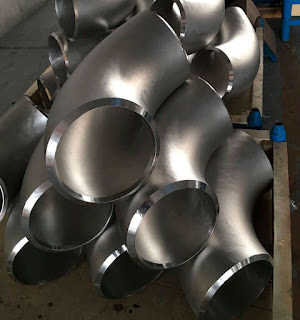
Stainless Steel Elbows
Elbows are used to direct the flow of a piping system. Elbows are commonly used and come in various angles, such as 45-degree and 90-degree elbows. In applications that call for smoother flow properties can be preferred, long-radius elbows can be used.
Stainless Steel Tees
Tees are used to join branches to the pipeline. They are frequently used to pass the fluid to a number of parts of a system.
Stainless Steel Reducers
Reducers are used to join pipes of different diameters together. The reducers are chosen to be concentric or eccentric based on the piping arrangement and application needs.
Stainless Steel Stub Ends
Stub ends are usually employed with lap joint flange assemblies. The design enables the piping system to be connected, as well as flexibility for assembly and maintenance.
Stainless Steel Crosses
Cross fittings are used to join more than two branches of pipe and can be helpful in particular pipe configurations where four flow paths must be connected.
Disposable End Caps made of stainless steel.
End caps are used to close the end of a pipeline. They can be employed in permanent installations or when a specific part of the pipe is to be terminated.
No fitting should be chosen for use unless it is chosen based on the system design.
How Welding Quality Affects Leak Prevention
In pipelines, the fitting is just a component of a connection in welded pipelines. System integrity might be greatly affected by the quality of the weld.
The following aspects are important for proper welding:
- Joint preparation
- Alignment
- Welding procedure
- Heat control
- Filler material selection
- Welder qualification
- Inspection requirements
- Surface cleaning
If the welding is not properly done, then it can lead to defects which can cause leakage or failure in due course. Therefore, the contractors should observe the relevant welding procedures and project specifications.
The material and dimensions of the fitting and pipe should also be compatible. Careful welding procedure preparation can help make the weld joint more durable and consistent.
Corrosion Resistance and Long-Term Reliability
Corrosion can cause the thickness, strength and reliability of metal parts to be diminished over time. In extreme cases, corrosion can ultimately lead to perforation or leakage.
In many corrosive environments, stainless steel fittings may be an advantage due to their corrosion resistance. However, stainless steel is not resistant to all chemicals and/or operating conditions.
When choosing a new CBT, take into account:
- Chemical composition of the process fluid
- Chloride exposure
- Operating temperature
- Pressure
- External environment
- Cleaning chemicals
- Potential galvanic interactions
So the choice of the appropriate grade of stainless steel may be considered an engineering decision rather than just a material selection.
Quality Control in Stainless Steel Fitting Manufacturing
There is a direct connection between manufacturing quality and industrial fitting reliability. Good Stainless Steel Pipe Fittings Manufacturers In India typically employ quality-control techniques to evaluate sizes, quality, material properties, and other pertinent concerns.
Some of these quality activities include:
- Raw material inspection
- Dimensional inspection
- Visual inspection
- Mechanical testing
- Chemical composition verification
- Non-destructive testing as required
- Marking and traceability
- Final inspection
The specific inspection program shall be based on the standard and project requirements.
Installation Is Equally Important
Even the best stainless steel fittings can have poor performance when they are not properly installed. Installation teams to be set up according to the approved procedure, and fittings are to be aligned and connected.
Good installation practices are:
- Inspecting fittings before installation.
- Verifying material and dimensions.
- Cleaning joint surfaces
- Maintaining proper alignment
- Using approved welding procedures
- Inspecting completed joints
- Carrying out pressure or leak testing when needed
Leak testing can be used to locate problems in a system prior to regular use.
Applications Where Leak-Resistant Piping Is Important
Stainless steel pipe fittings find application in many industries, in which dependable piping is critical.
Typical applications include:
- Chemical processing plants
- Oil and gas sites
- Food and beverage plants
- Pharmaceutical facilities
- Water treatment systems
- Power generation facilities
- Marine applications
- Industrial manufacturing
- HVAC and Utility systems
The performance demands may vary greatly from one industry to another, and the selection of the fit should be made based on the specific application.
Conclusion
How Stainless Steel Pipe Fittings Support Leak-Resistant Piping Systems explains the importance of the quality of the fit and selection, dimension control, the welding process, fitting installation, and fitting inspection. While stainless steel may prove very useful for corrosion resistance and durability, the effectiveness and reliability of a piping system depend on so much more.
.jpg)
.jpg)
Comments
Post a Comment