Strength at Every Connection: The Importance of Quality Pipe Fittings

A piping system has many components, all of which must function effectively to move liquids, gases, and other materials safely and efficiently. Though pipes are primarily recognised as the major component of the system, pipe fittings play a significant role as well since they join the various components, alter flow direction, reduce or increase pipe size and form branches in the system. For this reason, construction engineers, contractors, architects, project managers and procurement teams need to take the importance of quality pipe fittings into account.
A weak or improper fitting can compromise the reliability of an entire piping system. If properly selected and connected to meet the application's needs, however, quality fittings can offer greater dimensional accuracy, reliable connections, and trouble-free service. Each fitting in a pipe system serves a particular purpose, ranging from stainless steel elbows and tees to reducers, stub ends, crosses and end caps.
How Quality Pipe Fittings Support Strong Connections
Pipe fittings are connection points in a piping system. Depending on the application, these connections should be able to resist operating pressure, temperature changes, vibration and other mechanical stresses.
Piping performance can be supported with good quality fittings that can offer the following:
- Precise measurements for correct alignment.
- Suitable material strength
- Reliable connection surfaces
- More corrosion-resistant.Corrosion resistance.
- Consistent manufacturing quality
- Compatibility with the pipe that is connected to it.
The following are key qualities sought in piping for industrial projects, especially those that have to run continuously under heavy demands.
Different Types of Pipe Fittings and Their Functions
There are various kinds of fittings made to suit various parts of a piping system. The functions are important in making project team selections.
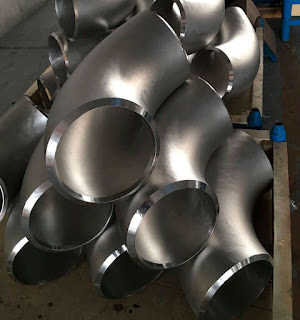
Elbows for Direction Changes
Elbows are used to change the direction of a piping line. There are a number of elbows available, such as 45°, 90° and 180°. Where a smoother change in direction is desired, long radius elbows can be used.
The proper elbow will vary based on the pipe configuration, space, flow requirements, pipe size and operating conditions.
Tees for Branch Connections
A branch pipe is a pipe with flow from multiple lines that merges into one. Reducing tees also have a smaller branch connection, as do equal tees.
Choosing the right tee is crucial for ensuring proper connections and fit with the rest of the piping system.
Different Pipe Sizes Reducers
Reducers are used to join pipes of different diameters. There are two types of reducers: concentric and eccentric, with the eccentric ones having an offset centerline.
The right reducer will be chosen according to the system configuration, flow requirements, installation arrangement, engineering requirements, and other factors.
Stub Ends for Flexible Flanged Connections
Stub ends are widely used with lap joint flanges. In some instances, they can offer a viable means for sections of pipe to be broken out for inspection or maintenance.
They are especially useful in applications that require flexibility when assembling and maintaining.
Material Selection Is Essential for Fitting Performance
The type of fitting material that is used will directly affect its appropriateness for use. Stainless steel fittings are commonly used in various industries where corrosion resistance, strength, and durability are crucial.
There are, however, always factors to consider when choosing a material, such as:
- Process fluid
- Operating temperature
- Operating pressure
- Corrosion environment
- Pipe material
- Applicable standards
- Project requirements
The right material can improve service life and minimise the risk of early component degradation.
Dimensional Accuracy and Manufacturing Quality
A fitting must be the right fit for the pipe it is designed to fit. Any small differences in dimensions may cause alignment or installation problems.
Quality manufacturing is about consistency in parameters like:
- Outside diameter
- Wall thickness
- Centre-to-end dimensions
- Fitting angles
- End preparation
- Overall geometry
When it comes to welding, alignment and assembly, contractors and installation teams appreciate the help of accurate fittings.
Again, while choosing a Pipe Fittings Manufacturer in Mumbai, buyers must not just consider the availability of the products but must also take care of aspects such as manufacturing capabilities, quality-control measures, material options, testing and documentation.
Why Standards and Quality Inspection Matter
Many industrial piping projects have certain technical requirements. Standards for manufacturing and dimensional consistency are recognised and help to set boundaries for both manufacturers and engineers and buyers.
For different fittings and projects, procurement teams might require verification of:
- Product dimensions
- Material grade
- Wall thickness
- Manufacturing standard
- Pressure requirements
- Testing requirements
- Inspection documentation
- Product traceability
Quality inspection can help discover dimensional and material problems before products reach the stage of installation.
Conclusion
Quality pipe fittings ensure the strength and reliability of a pipe system at all fittings. Each part is designed for a particular purpose and plays a key role in ensuring the efficiency and security of the network, whether it is an elbow, tee, reducer, or stub end.
Fitting performance is affected by material selection, dimensional accuracy, manufacturing quality, applicable standards, inspection and proper installation as discussed above. Choosing a Pipe Fittings Manufacturer in Mumbai with experience can benefit contractors, engineers, architects, and procurement professionals by ensuring that the right fittings are used for the job, as they are likely to be designed to fit the specific needs and requirements of the project.
.jpg)
.jpg)
Comments
Post a Comment